
Circa 1900
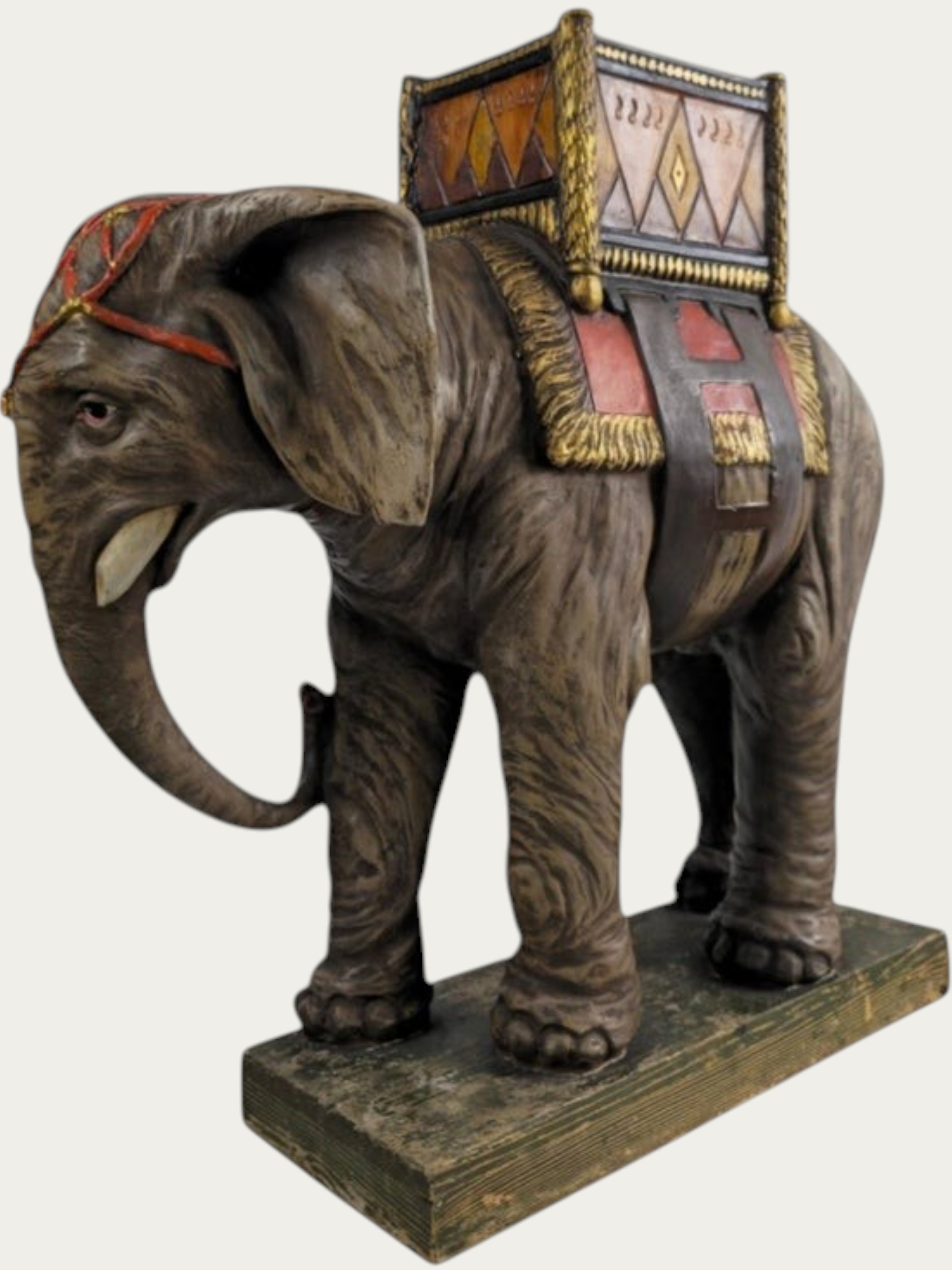
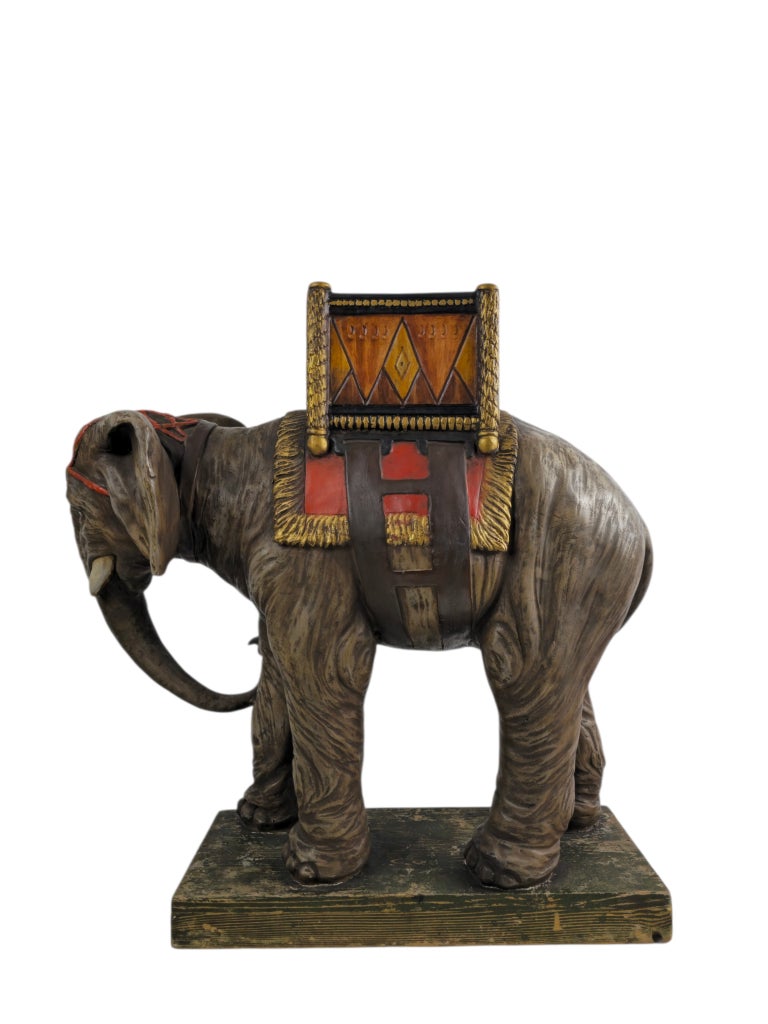
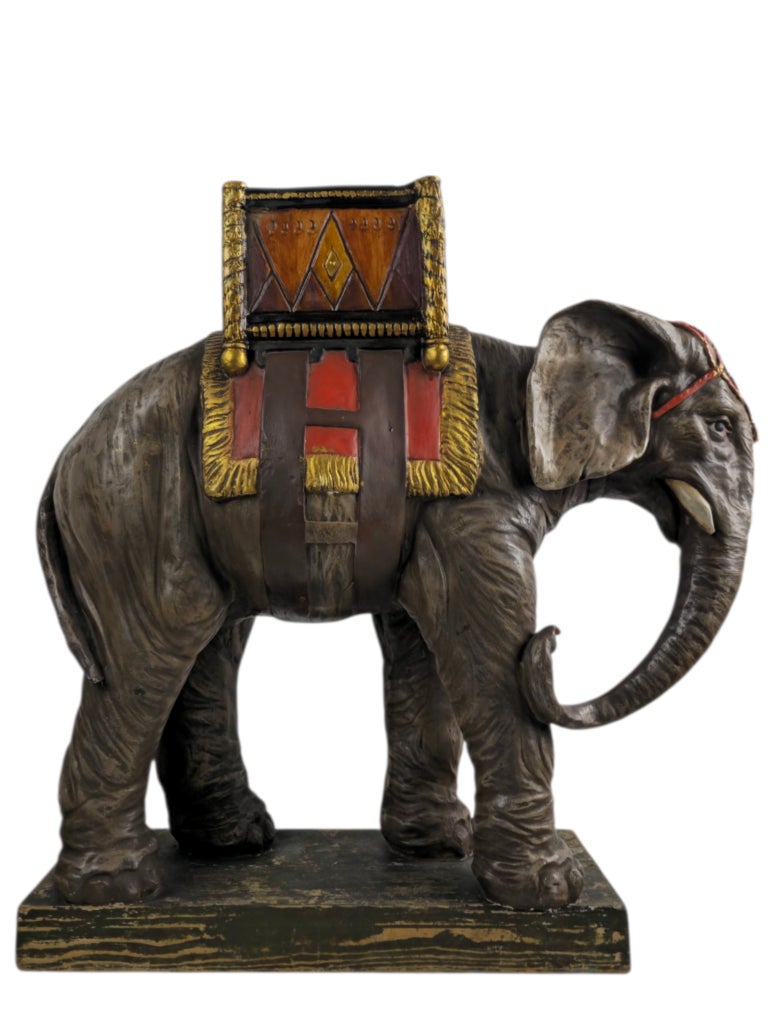
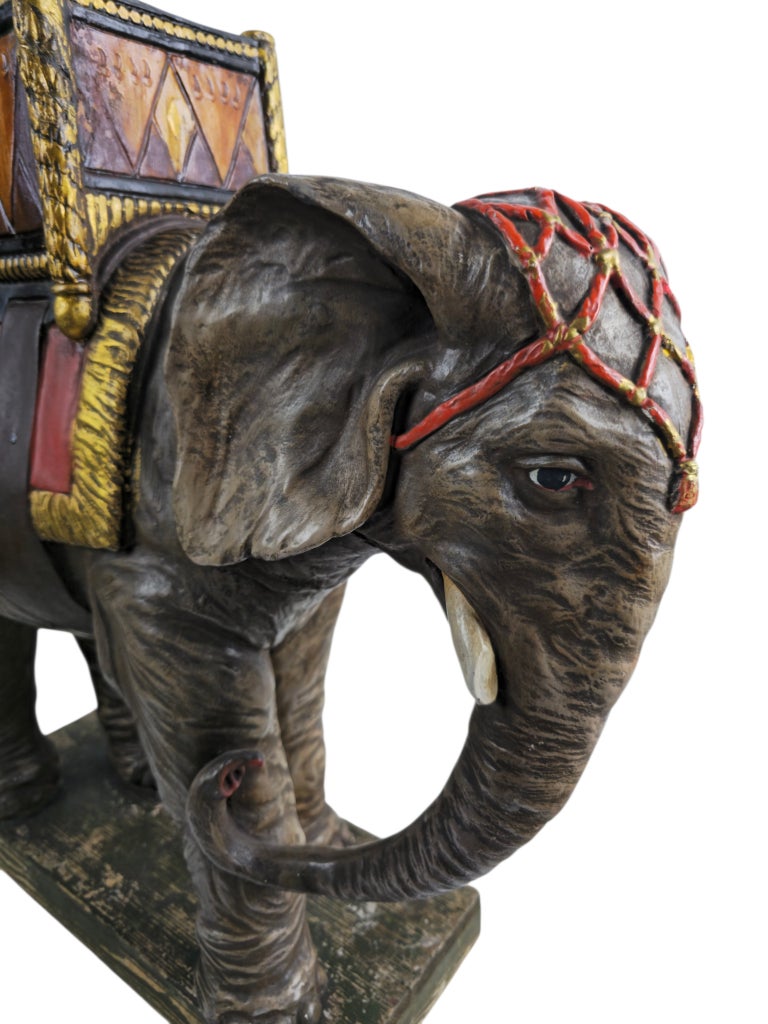
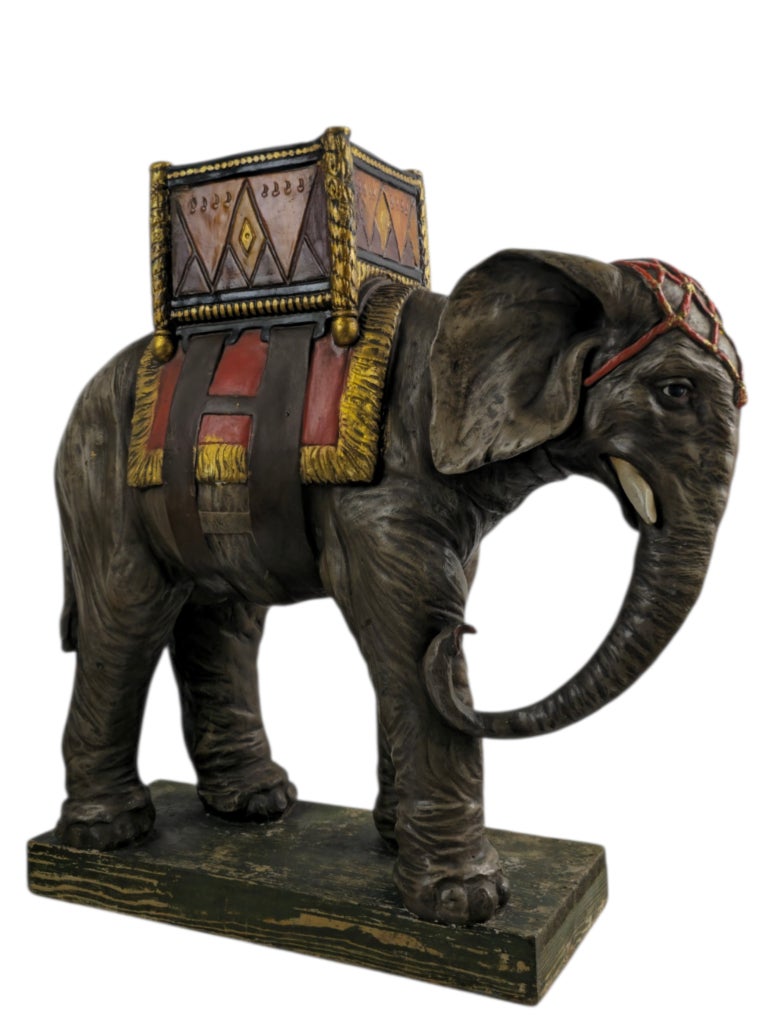
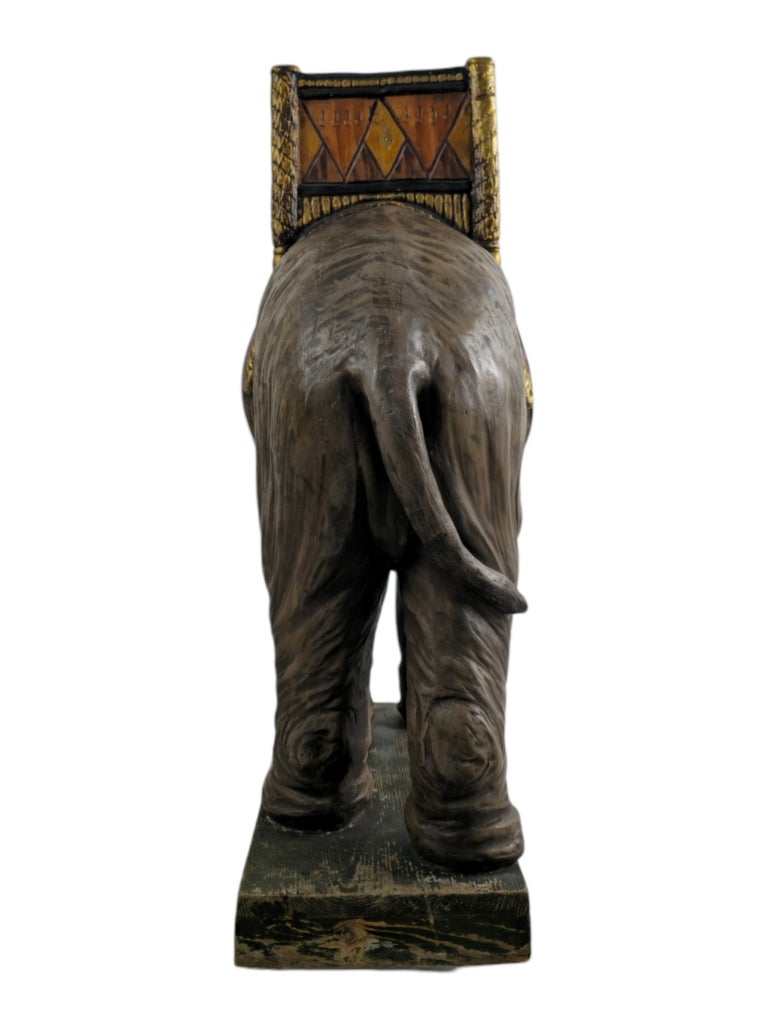
A striking and highly decorative sculpture depicting a richly caparisoned elephant carrying an elaborate ceremonial howdah. Executed in plaster (“Gips”) with painted and gilded decoration and mounted on a substantial wooden base, the sculpture presents the animal in a powerful and dignified pose.
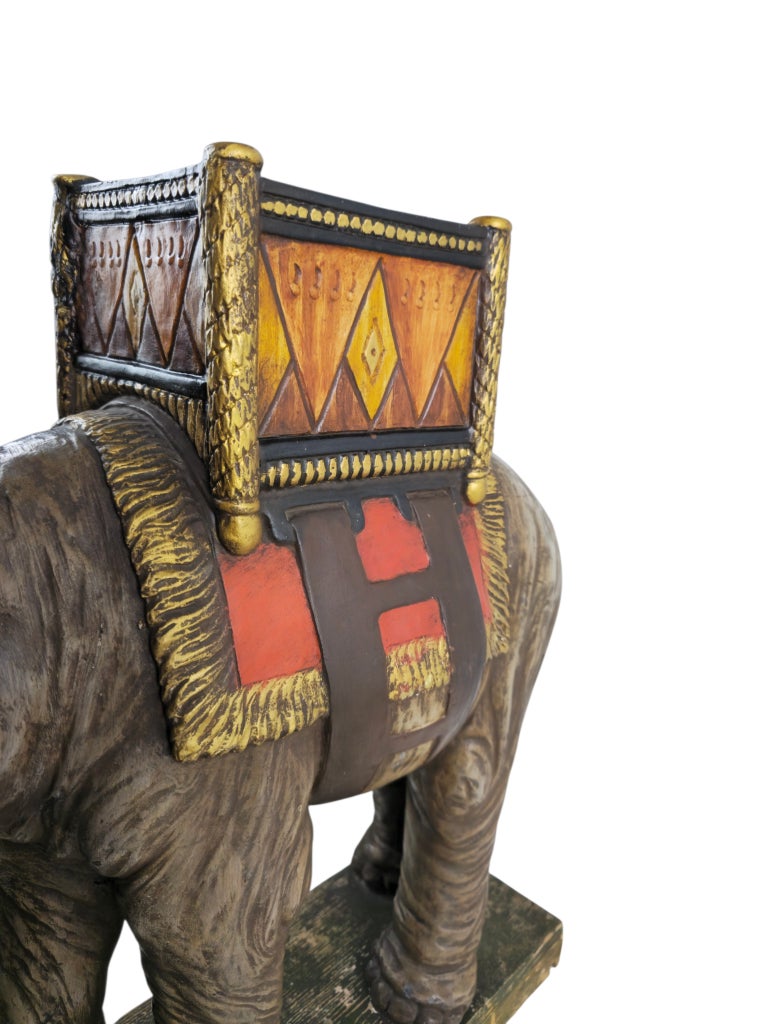
The elephant wears an elaborate ceremonial harness and headpiece, while its back carries a richly decorated howdah with geometric ornaments in red, black, and gilt. The carefully modelled body, expressive face, large ears, tusks, and monumental stance give the sculpture a particularly impressive presence.
Christian and Iconographic Significance
The elephant has a particularly interesting connection to King Balthazar, one of the Three Magi who travelled to Bethlehem to pay homage to the Christ Child. While the Gospel of Matthew does not identify the Magi by name, nor does it specify their number or means of transport, later Christian tradition developed the familiar figures of Caspar, Melchior, and Balthazar.
From the Renaissance onward, European artistic tradition increasingly associated the three Magi with different parts of the known world and with characteristic modes of travel. In one particularly enduring tradition, Balthazar was associated with the Orient and represented travelling upon an elephant, while the other Magi were associated with different animals. This iconography can be found in Christian Nativity traditions and representations of the Adoration of the Magi.
The association is especially compelling because the elephant itself was understood in European Christian art as an animal of great strength, dignity, and exotic majesty, making it an appropriate mount for a king travelling from a distant land to worship Christ. Elaborately adorned elephants therefore became a powerful visual means of conveying the royal status, wealth, and distant origin of the Magi.
This sculpture can consequently be understood not merely as an Orientalist representation of a ceremonial elephant, but as an object connected to the Christian iconography of the Three Kings and the Epiphany. Its richly decorated howdah and elaborate trappings reinforce the association with a royal procession, making the sculpture particularly evocative when interpreted as the elephant of King Balthazar approaching Bethlehem.
The combination of Christian symbolism, royal pageantry, and Orientalist decorative taste makes this an unusual and highly decorative sculpture, particularly suited to collectors of religious art, historic European decorative arts, and representations of the Three Magi.
Origin: European / Orientalist decorative art
Date: Circa 1900
Materials: Plaster, painted and gilded decoration, wooden base
Subject: Ceremonial elephant associated with King Balthazar and the Three Magi
Condition: Good antique condition with age-related wear and surface patination consistent with age and use. The sculpture seems to have been restored from former damage at some point.
Dimensions: Height 59 cm (23.2 in.); Width 60 cm (23.6 in.); Depth 23 cm (9.1 in.)