
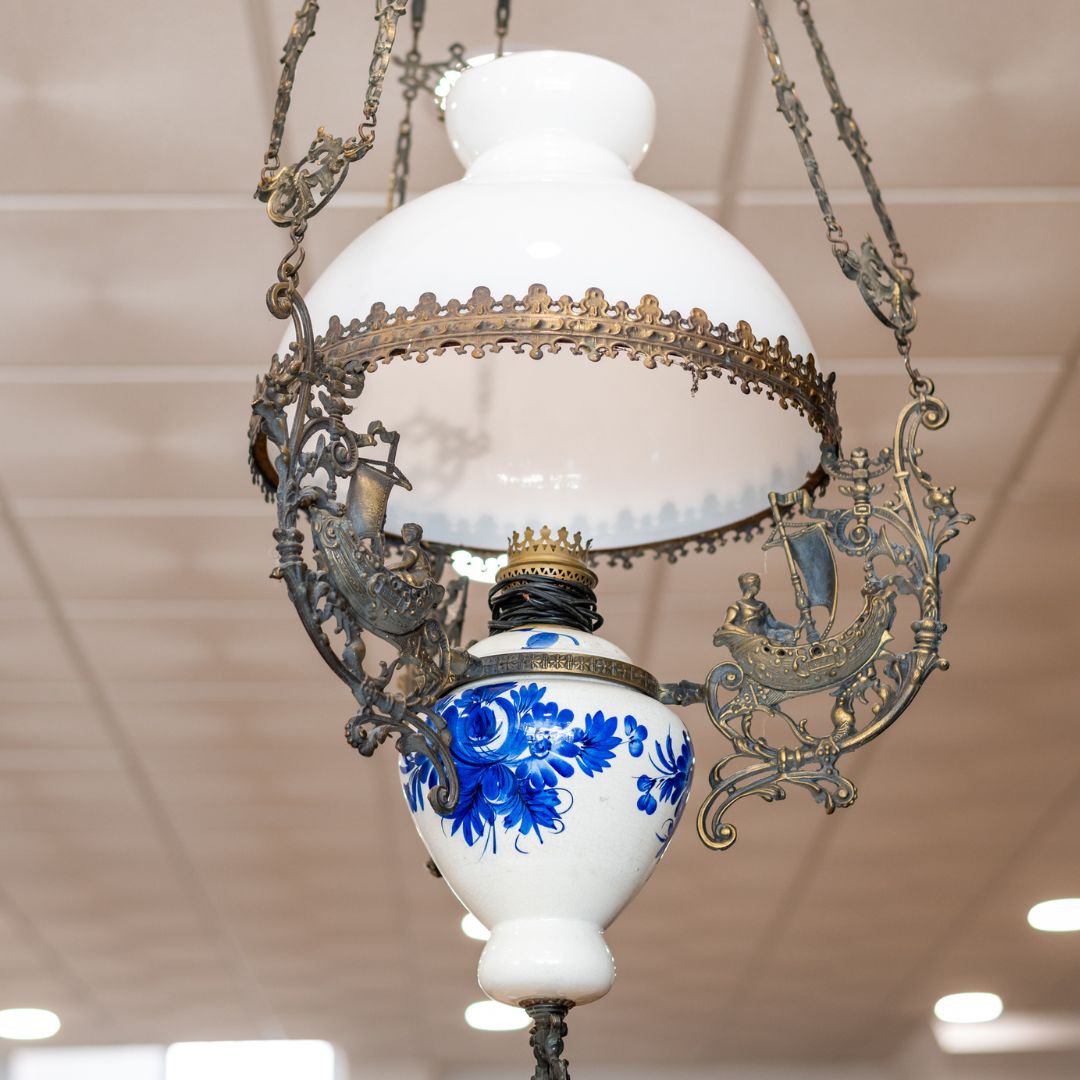
Some time ago, while reviewing several antique pieces in the same lot, it was detected that some were misclassified. Several had been sold as porcelain when they were actually faience. It was not an isolated case; this type of error happens more often than it seems, especially when the materials are not well known.
In this article we want to explain the differences between porcelain and faience pieces.
Porcelain and faience pieces
Porcelain and faience are part of the same general group: ceramics, but that does not mean they are the same. Within that group there are quite a few differences that are not always visible at first glance. The problem is that many pieces have very similar shapes and uses, and they can also share decorative styles, so it is easy for people to confuse them without thinking too much about it.
It is quite common to find tableware, vases or figures made from both materials. If you add to that the fact that many are glazed or decorated, telling them apart becomes even more complicated. In addition, in the second-hand or antiques market, there is not always clear information about the origin or the material, so confusion is even more common.
It is also important to take into account the condition of the pieces. Over time they can lose shine, develop small cracks or have been restored, which changes their original appearance. On top of that, many people are not familiar with these materials, so they do not really know what to look for. It is not something difficult, but you do need to pay attention to certain details to avoid making mistakes.
Differences between porcelain and faience pieces
Although they may seem the same in some cases, porcelain and faience have clear differences. Understanding them helps to avoid mistakes when buying and also to better value each piece.
Porcelain
Porcelain is a more refined material with a more demanding manufacturing process. These are some of its main characteristics:
- Material and firing: it is made from a mixture of kaolin, feldspar and quartz. It is fired at very high temperatures, which makes the result harder and more resistant.
- Appearance: it is usually white and has a finer finish. In thin pieces, it can be slightly translucent, something that does not happen with other types of ceramics.
- Surface: it is smooth and uniform. It usually does not have visible imperfections if it is well made.
- Resistance: it is less porous, which means it absorbs fewer liquids and withstands daily use better.
- Feel to the touch: it is usually lighter and finer compared to other ceramics.
- Common use: it is used both in decorative pieces and in higher-quality tableware.
Faience
Faience has a simpler process and a different result, although it has also had great historical importance:
- Material and firing: it is made with more common clays and fired at lower temperatures than porcelain.
- Appearance: it is not translucent and usually has a duller base color, which is improved with glaze.
- Surface: it depends a lot on the glazing. It may have small irregularities or a less uniform finish.
- Porosity: it is more porous, which means it can absorb moisture if the glaze is damaged.
- Resistance: it is somewhat more fragile and can deteriorate sooner if not properly cared for.
- Decoration: many pieces have a more artisanal style, with hand-painted decorations.
- Common use: it has been widely used in traditional ceramics and decorative objects.
Get an antique in Málaga made from the best material
At Luxury Living & Fine Art Nachtmann we work with carefully selected antiques Málaga, paying attention to the real material of each piece. We know it is easy to confuse porcelain and faience, which is why we review each object before putting it up for sale, making sure it is correctly identified.
In addition, at Luxury Living & Fine Art Nachtmann we guide buyers with clear and direct information. It is not just about choosing a piece based on how it looks, but about understanding what material it is, how it was made and what value it really has within the antiques market.
Contact us and get an antique for your home.