
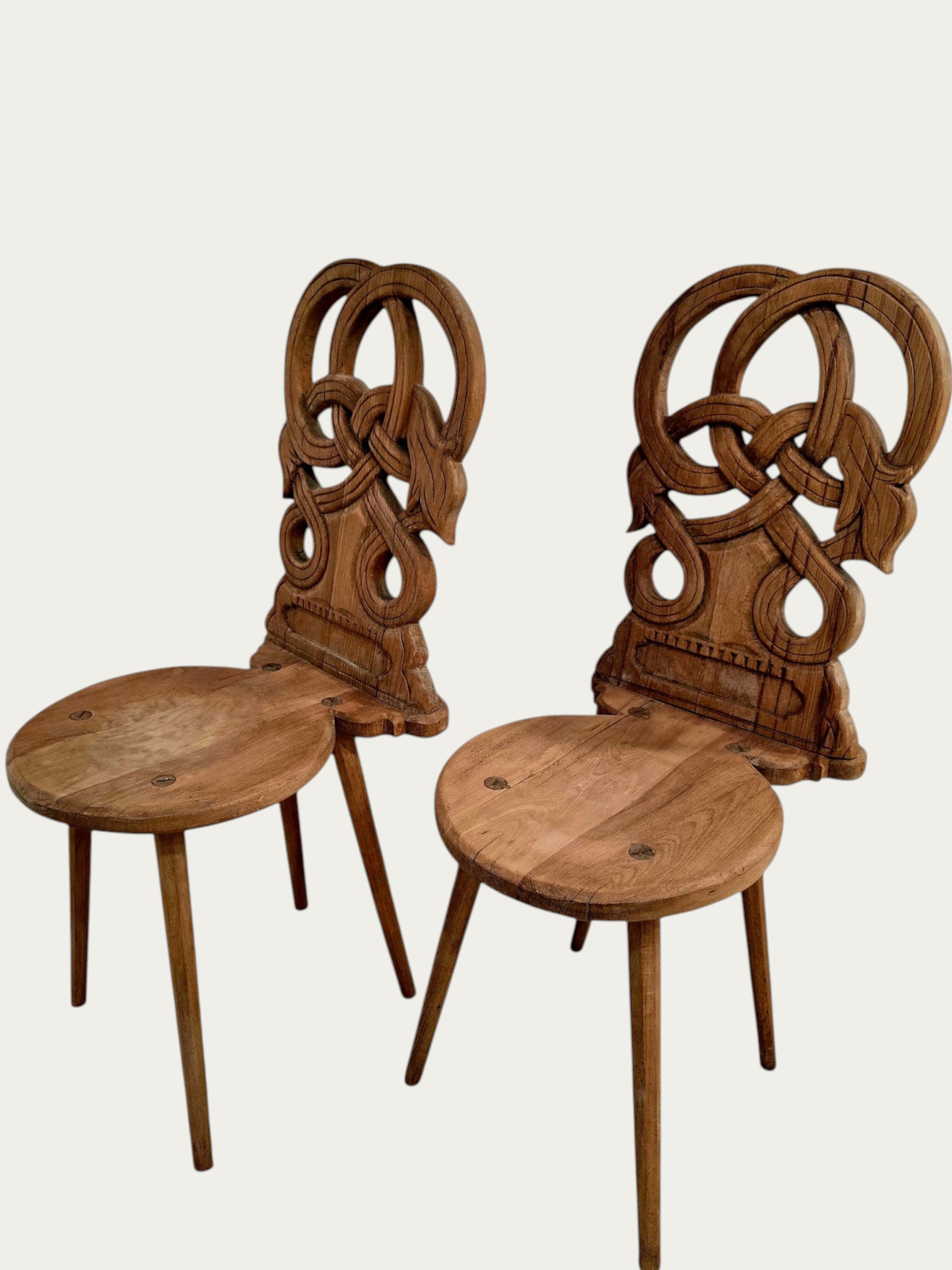
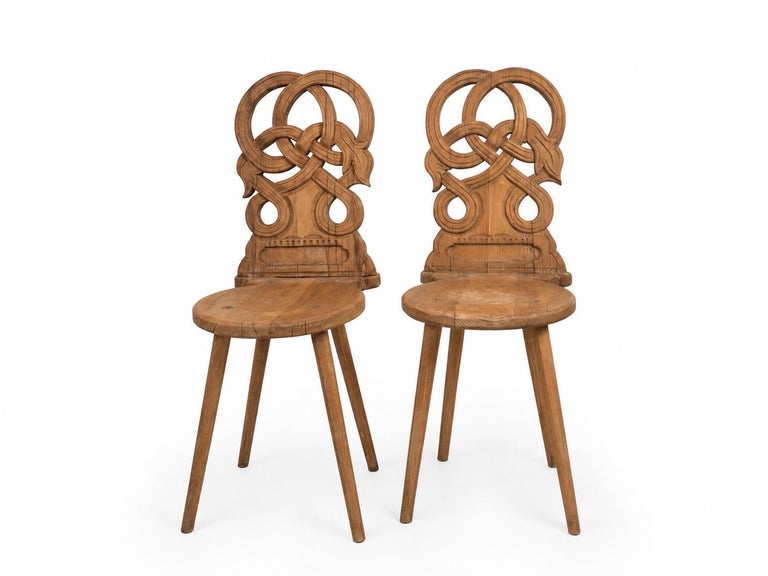
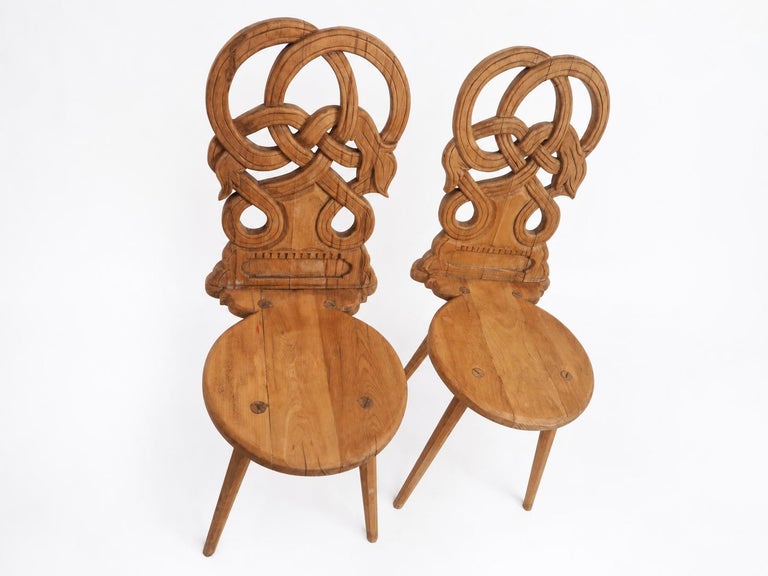
Germany, circa 1780
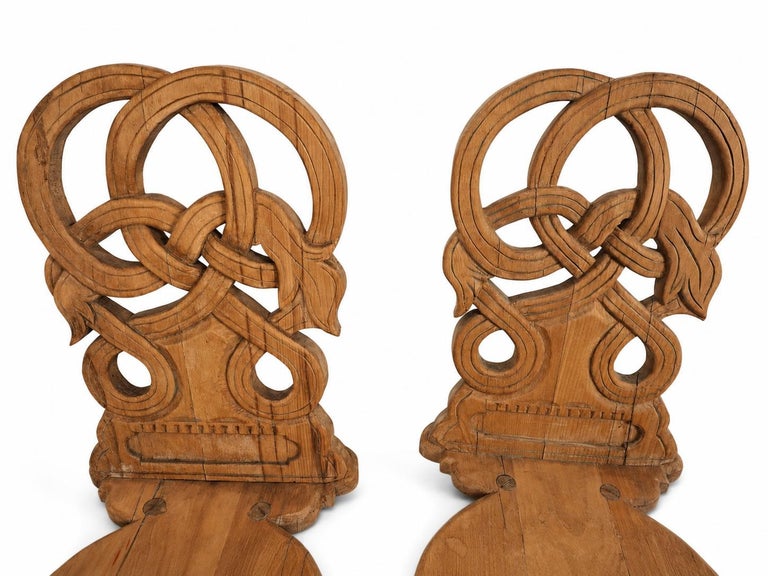
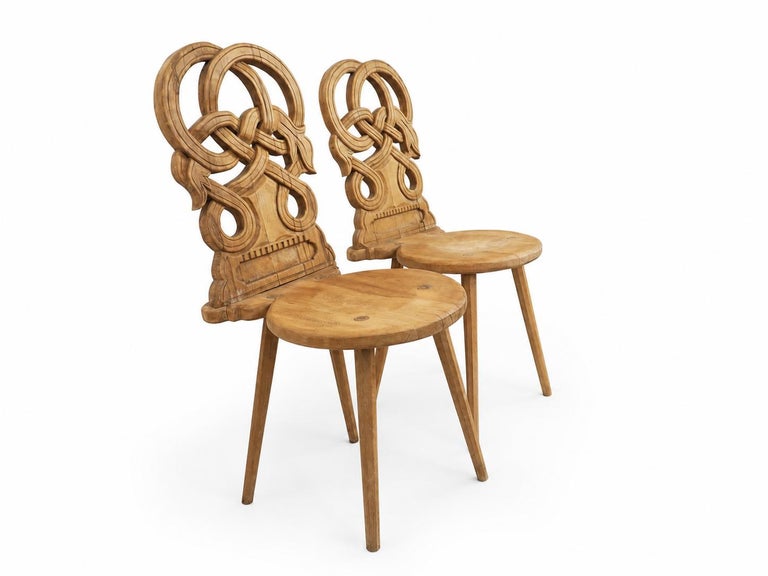
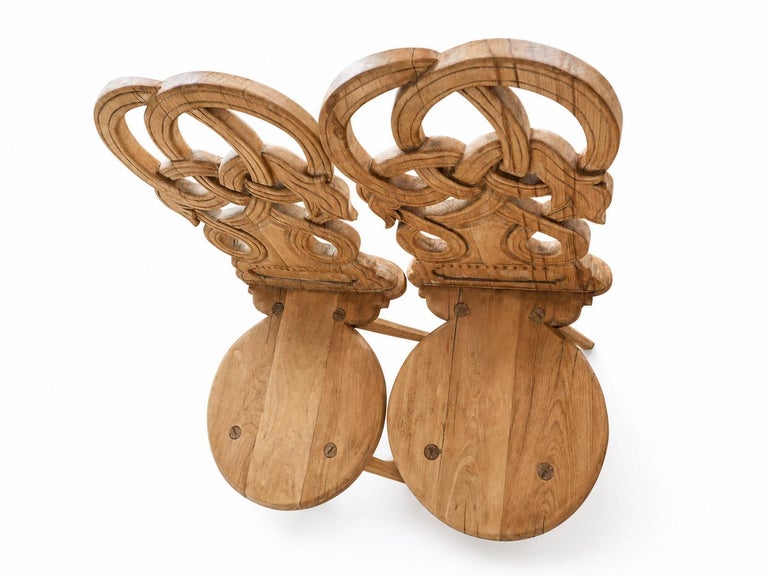
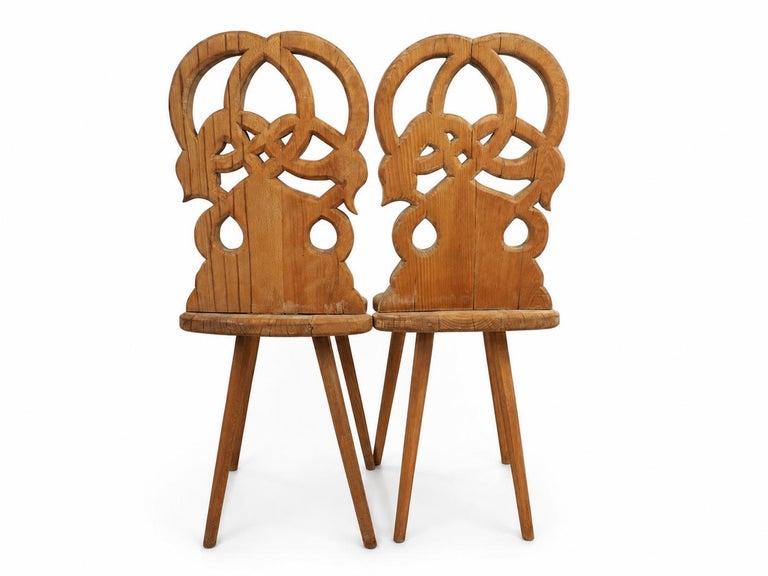
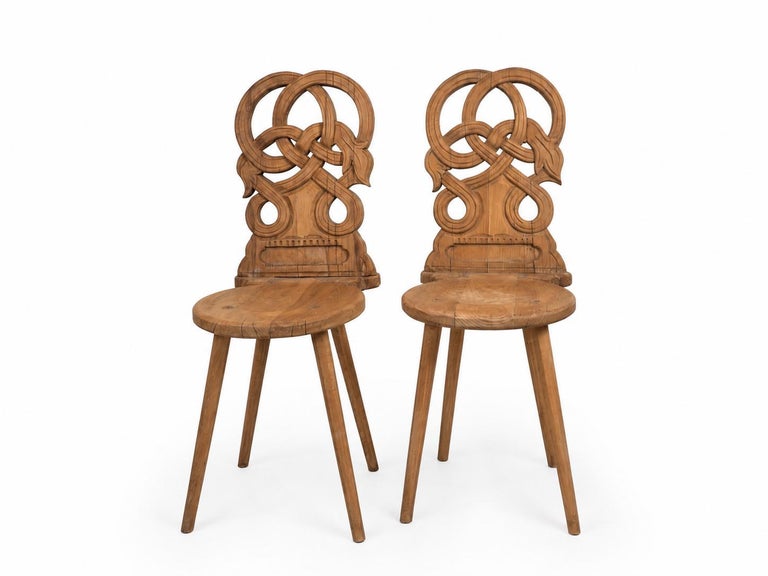
A remarkable and exceptionally rare pair of German “Snake Chairs” (Schlangenstühle), handcrafted in beechwood around 1780. Distinguished by their unusual carved serpent motifs, these chairs are outstanding examples of 18th-century Central European folk art, where decorative carving was often imbued with deep symbolic meaning beyond its ornamental appeal.
In German-speaking regions, the serpent was traditionally regarded as a protective symbol rather than a sinister one. Inspired by the ancient belief in the Hausnatter—the benevolent house snake believed to guard homes and farms—the carved serpents were thought to ward off misfortune, illness, evil spirits, and the “evil eye.” Such imagery served an apotropaic function, protecting both the household and the individual seated upon the chair.
The serpent also carried positive associations with healing, renewal, and longevity. Its ability to shed its skin made it a timeless emblem of regeneration and vitality, while its connection to the ancient symbol of Asclepius reinforced its association with health and well-being. As a result, these chairs were not merely functional furnishings but symbolic objects intended to bring protection and good fortune to the home.
Expertly crafted from solid beechwood, the chairs exhibit graceful proportions and finely carved details that reflect the high level of craftsmanship typical of the late 18th century. Their rarity, distinctive iconography, and rich cultural significance make them highly desirable collector’s pieces.
An exceptional pair of authentic German folk-art chairs that combine historical symbolism with remarkable decorative appeal.
Origin: Germany
Date: Circa 1780
Material: Solid beechwood
Condition: Good antique condition with age-related wear consistent with age and use.
Dimensions:
Height: 98 cm (38.6 in.)