
Preserving the integrity of works of art and antiques requires attention to everyday details that often go unnoticed at home or in a business. That is why, in this guide, we have gathered the most important tips for preserving art and antiques, designed for those who want to protect both the historical value and the authenticity of their pieces over the long term.
Why is it so important to properly preserve art and antiques?
A collectible piece is not just a decorative object: it is a material testimony of an era, a technique, or a family history. When deterioration progresses unchecked, details that are, in many cases, irreplaceable are lost, such as the original patina of a piece of furniture, the tone of a pigment, or the texture of an antique fabric. Restoring a piece after serious damage never returns it to its original condition; at best, it disguises the problem.
In addition to the sentimental or aesthetic value, there is an economic component that should not be overlooked. The state of preservation directly influences the appraisal of a piece, and a poorly maintained antique can lose a significant part of its market value, even if its authenticity is not in question. Buyers, collectors, and professional appraisers pay special attention to signs of deterioration such as cracks, discoloration, or poorly executed restorations.
Finally, there is a responsibility that goes beyond the individual. Many of these pieces are part of a cultural heritage that is passed down from generation to generation, and their daily care is what allows them to continue existing a hundred years from now. Adopting good preservation habits is, in this sense, a way of ensuring that this history continues to have “life.”
Tips for preserving art and antiques
Before thinking about restorations or complex interventions, it is worth mastering a few basic habits that make all the difference:
Control the environment where the pieces are stored
The environment is the first line of defense for any antique, and it is also usually the most neglected aspect. For example, pieces made from organic materials react immediately to changes in their surroundings.
If temperature and humidity vary greatly from one day to the next, wood may shrink or swell, flat surfaces may warp, and metal pieces may begin to rust. That is why keeping the environment stable is so important: once this type of damage appears, it can almost never be fully corrected.
Manage light exposure to prevent irreversible damage
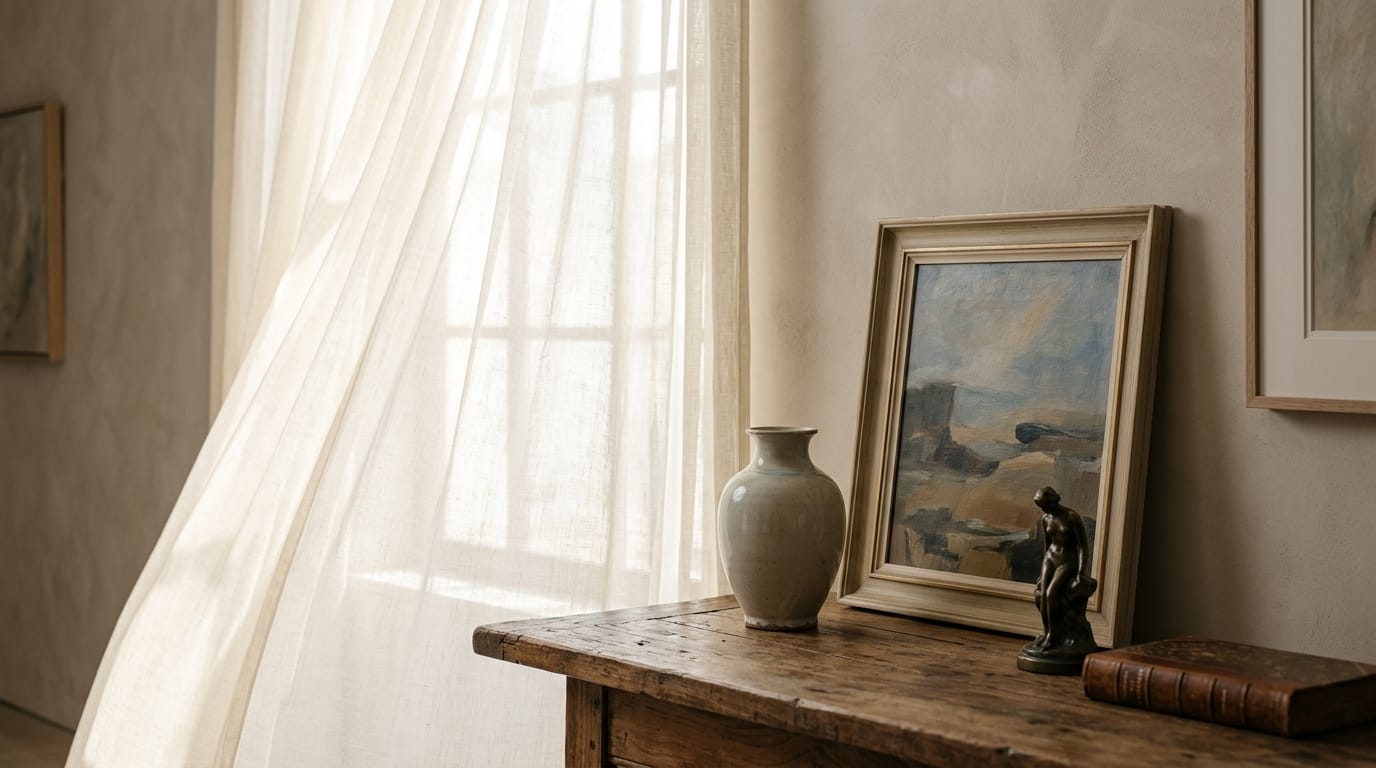
Direct sunlight is one of the most aggressive factors for any collectible piece, mainly because of the ultraviolet radiation it contains. This radiation causes photodegradation, which results in fading pigments, yellowing varnishes on paintings, or structural weakening in textiles and paper.
To reduce this risk, it is advisable to install UV filters on windows or use technical curtains that block radiation without completely eliminating ambient light. In addition, whenever possible, delicate pieces should not be placed in south-facing rooms where they are exposed to direct sunlight for long periods throughout the day.
Maintain appropriate temperature and humidity stability
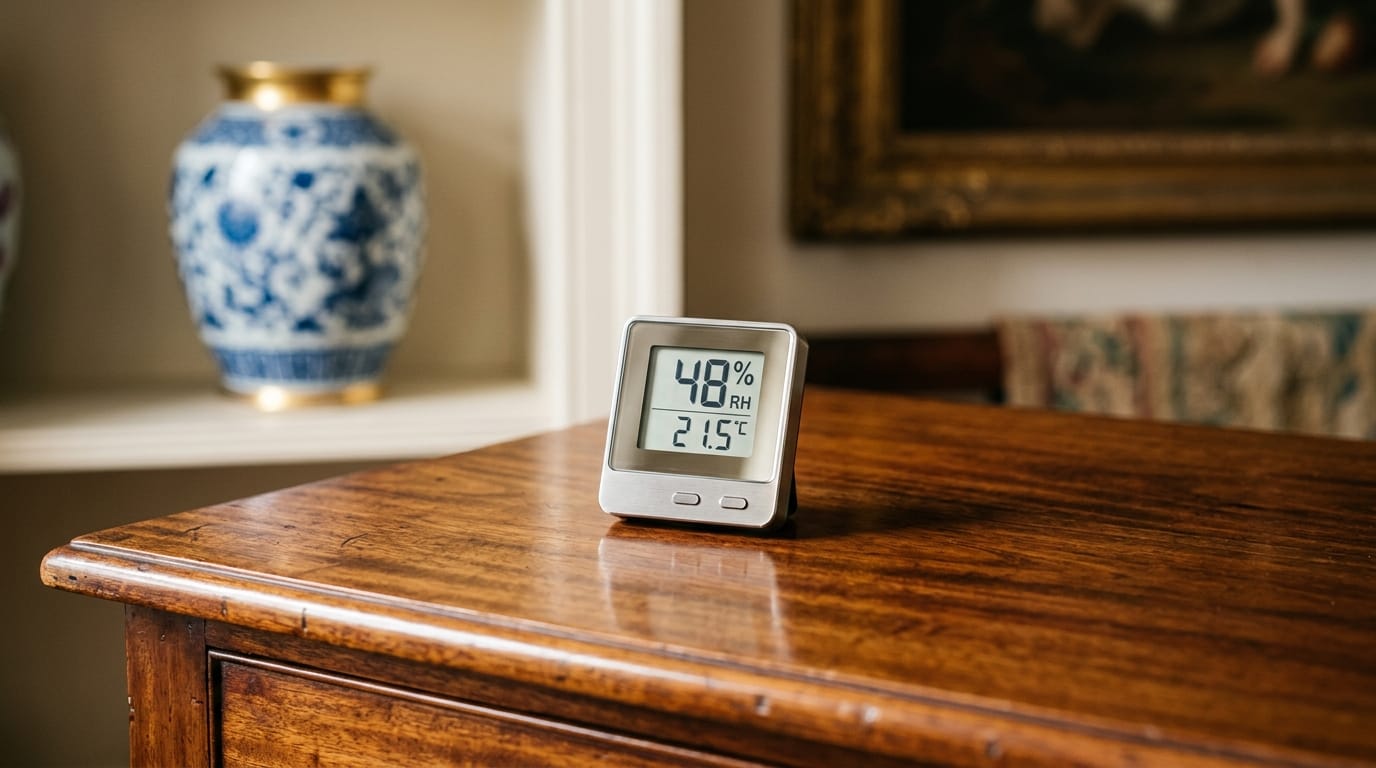
Porous materials, such as wood or canvas, constantly absorb and release moisture, and if these levels are not kept stable, the integrity of the piece is compromised. As a general reference, the ideal relative humidity is between 45% and 55%, with a temperature that does not exceed 20–22 degrees.
A digital hygrometer makes it possible to monitor these conditions in real time, and if sudden fluctuations are detected, a dehumidifier or automatic humidifier is usually enough to prevent cracks in furniture or corrosion in silver or bronze pieces.
Establish basic cleaning and handling protocols
Careless handling is one of the most common causes of accidental damage, and many of these damages are irreversible. Each material requires different treatment to avoid the transfer of moisture, the skin’s natural oils, or minor abrasions. Cleaning, in this context, should be understood as preventive maintenance focused on removing surface dust without altering the original patina, which is precisely one of the elements that defines the historical value of the piece.
Apply safe techniques for handling valuable objects
Whenever it is necessary to move or inspect an antique, using clean cotton gloves is a basic rule that should be respected. The natural oils and sweat from hands can leave lasting marks on metal surfaces or damage varnishes over time. It is also important to ensure that the surface supporting the piece is stable and free of unevenness.
In the case of antique furniture, it should always be lifted by its main structure, never by ornamental elements or decorative finials, which are usually the most fragile parts.
Avoid using aggressive products on historic surfaces
Harsh chemicals or industrial waxes often leave residues that react with old varnishes, darkening them or creating whitish layers that are almost impossible to remove without professional restoration.
If a piece has stains, persistent dirt, or signs of deterioration, the most advisable approach is not to attempt home cleaning and to consult conservation specialists directly.
Professional advice for the preservation of art and antiques in Málaga
Managing a private collection or an inheritance is not always easy, and it is often advisable to rely on someone with real experience in the sector. At Luxury Living & Fine Art Nachtmann, we work with art and antiques in Málaga, and we have helped collectors and private owners care for their pieces and make better decisions about them.
We provide confidential valuations and authenticity assessments, always with discretion and professionalism, while also offering you advice on preserving your new collection.
So, if you need an appraisal for your collection, help with an inheritance, or want to sell a piece, you can contact us. We will be delighted to help you.